

Keep Right — Column by Ralph K. Ginorio
Poor Christian that I am, I do try to consider when the wisdom of scripture illuminates contemporary events. While I personally believe that God’s capacity for forgiveness is limited only by His will, there is classically a category of sin that Christians widely consider to be unforgivable.
Think about the enormity of this. Christianity is a faith grounded in the conviction that God so loved the world that He sent His only begotten son to die for our sins so that those who believe in Him might have life eternal. God reaches out to us, inviting us to reconcile ourselves to His truth. Many of Christ’s teachings encourage believers to extend a loving grace to those who trespass against us. In a context such as this, the words “unforgivable sin” seem nothing less than shocking.
Yet, on several occasions the New Testament describes “sins against the Holy Spirit” as being unforgivable. Why?
Among other things, the Holy Spirit awakens our insights and guides our conscience. It gives us a capacity to perceive God’s hand in our life’s events. It clues us in to the meaning and significance of what we experience. It shows us ways we might discern reality, pursue reconciliation, and embrace salvation.
Scorning such sensibilities and deadening ourselves to them cuts us off from divine inspiration. God invites us, but we can each spurn His advances. We can, through a series of determined choices, render ourselves insensible to any divine call. With enough effort, we can cut ourselves off from God’s invitation.
This is why it is unforgivable. It makes us incapable of understanding why we need to repent of our sins by destroying our ability to distinguish right from wrong, beautiful from ugly, truth from falsehood. In blinding ourselves to the Holy Spirit, we deprive ourselves of an ability to assess the morality of our deeds or perceive the health of our spirit.
No objective dissonance or spiritual epiphany will penetrate our complacent sense of sufficiency. If we are not alarmed to the potentially sorry state of our soul, why would we ever make the effort necessary to change our ways?
As my words should make evident, I am no theologian. My vocation is to teach the history of Western Civilization, not to be a Minister of the Lord. Even so, I humbly, respectfully, and earnestly suggest that much of our contemporary controversy is a result of a version of sinning against the Holy Spirit.
The 2024 Election was a conspicuous rebuke of today’s national Democrat Party. Kamala Harris’ loss was more abject than any defeat since Walter Mondale’s in 1984. It gave Donald Trump the Presidency as well as governing majorities in both Houses of Congress.
Coupled with the U.S. Supreme Court’s current Conservative majority, this gives the second Trump Administration a capacity to fundamentally alter American society more thoroughly than at any time since Lyndon Johnson’s 1964 victory made his Great Society Welfare programs a reality.
Despite the scope of their epic defeat, the Democrat National Committee refuses to publish its after-election analysis. What should have been a fundamental reassessment of their identity as a Party, the objectives of their movement, and the means with which they will pursue these ambitions was suppressed. Today’s Democrats basically said, with this failure to publish, that
they really needed to change nothing about themselves.
This is madness, but it is explicable. Today, Democrats live in terror of their “Base”. These genuine Communists and their Fellow Travelers comprise the activist class that everything else that they do is built upon. Comprising relatively small numbers, their ardor for “the Revolution” leads them to fund the Party and to do its everyday work.
Such activists never question their fundamental assumptions. Utterly un-self-critical, they approach life’s complexities with a zealous fervor that thunderously insists that every detail of their shared worldview is the total and exclusive truth.
To even question the articles of such a faith reveals thought-crime. To insert nuanced subtlety, circumstantial exceptions, and theoretical limits to their dogma is self-evident Heresy. As Heretics are traitors, they must be purged.
Because they cannot freely explore why they failed in 2024, Democrats cannot even begin to try to imagine other ways that they might serve the reformist impulse that is their fundamental motivation. Their brittle insistence that what happened then is not their fault renders them incapable of being self-critical.
Without self-criticism, they have no need to consider their own culpability and error. Without such an epiphany, there is no need for them to wrestle with what has gone wrong and with how they might improve.
Like all who are too fearful or self-righteous to examine the ongoing validity of their root assumptions and the choices, words, and deeds that these un-reflected-upon convictions produce, today’s Democrats have, in effect, sinned against the Holy Spirit. Their sanctimony and zealotry has deadened their capacity to notice anything that might tip over the vainglorious Tower of Babel that is their secular faith. They are indeed flirting with living lives that are self-inflictedly irredeemable.
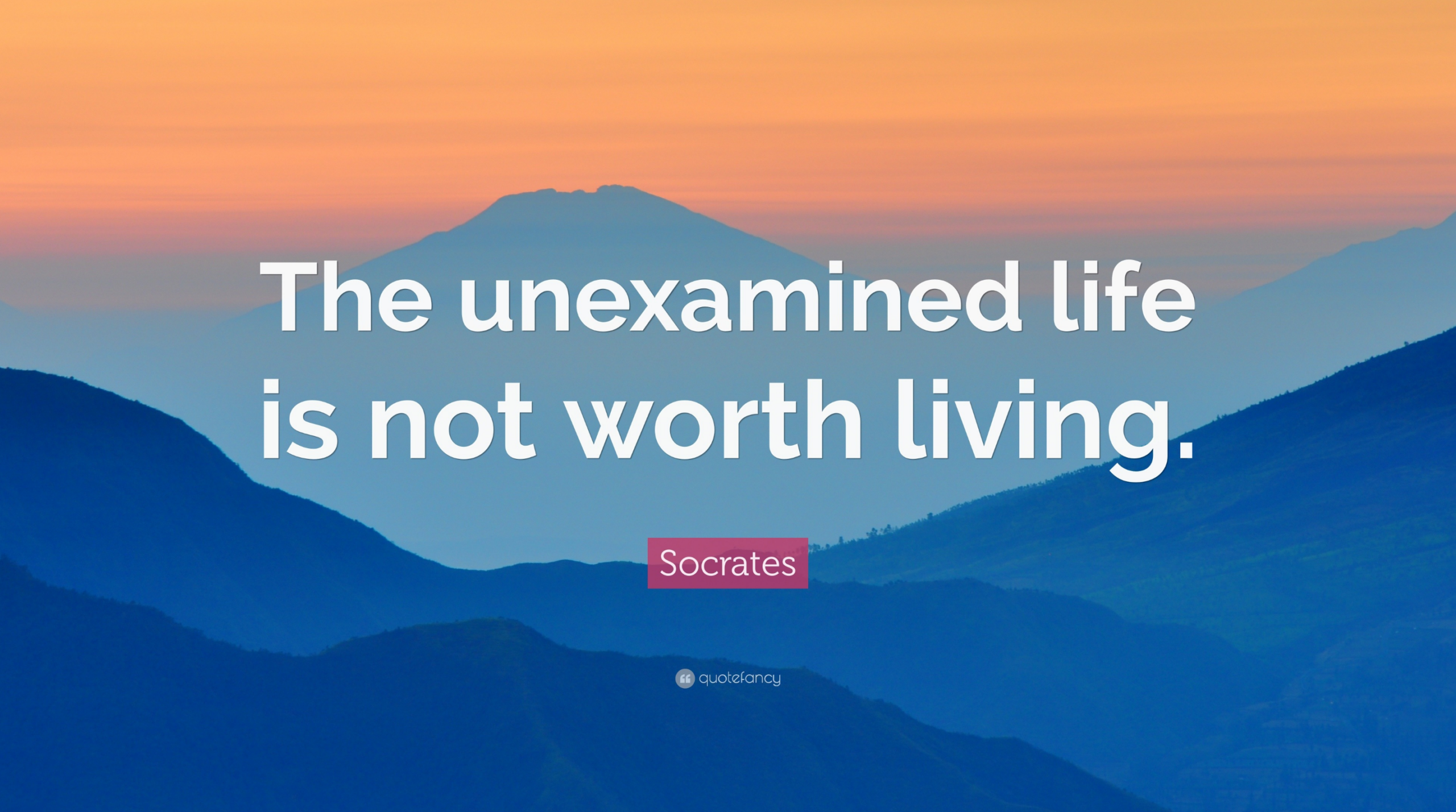
An unexamined life is not worth living.
Socrates