


…See to the ministry which you have received in the Lord, so that you may fulfill it.
Colossians 4:17, NASB
The Liberated Learner — Column by Suzanne Kearney
I just enrolled my daughter in school.
Yes, you read that right. Me, the one arguing month after month that homeschooling is the best way to educate.
Have I changed my mind? No. I still believe that the one-on-one, relationship-focused instruction that homeschooling enables is the gold standard for kids, especially during the early formative years. So why did we make the change?
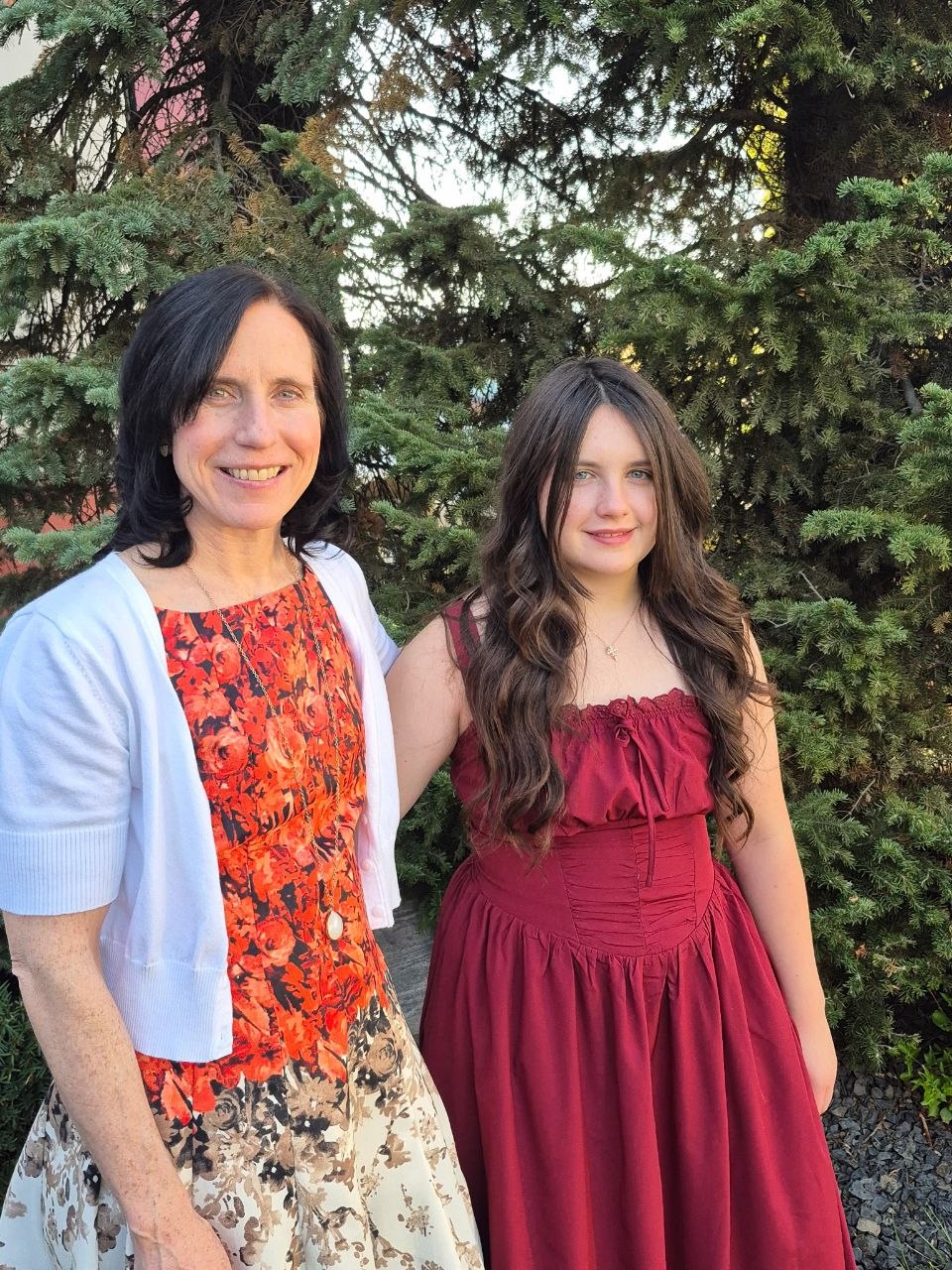
Let me back up for a moment. Last Sunday, my daughter celebrated her “Rite of Passage” celebration through CROP ministries, marking her official transition from childhood to adulthood. At 14, her physical, moral, and spiritual foundations have already been laid. In contrast to our modern era, many ancient and medieval societies would have considered her an adult even earlier. Consider countless historical figures who were entrusted with and took on mature roles at young ages — Alexander Hamilton became his own breadwinner at 13; Benjamin Franklin a published author at 15; Joan of Arc led French troops at 17. In fact, the phenomenon of “adolescence” or extended childhood is a rather new concept. By continuing to treat our teens as “transitionary” (creating a prolonged state of self-doubt and unnecessary infantilism), we enable delayed growth in maturity. Perhaps if we expected more of them, I mean, really expected it, they would rise to the occasion.
As I have said in the past, homeschooling, like any other educational approach, is not perfect. Any system in which humans interact will eventually involve conflict. My daughter, as of late, has grown weary of the “Mom as Teacher” aspect of our relationship — and to be honest, so have I. She has not been learning at her potential, and our relationship has grown more complicated, because she wants to explore her identity outside of the home. At her age, this is actually normal and healthy. The “close-quarters” aspect of homeschooling that makes it an asset can also make it, at times, a liability. Since birth, my daughter has spent the majority of her time at home with me. I have been both parent and teacher, helping guide her physical, mental, and spiritual growth. And that task is mostly complete. Although I would like to homeschool her through high school, her situation and temperament are different than her siblings. If the core purpose of homeschooling—relationship-based learning—is no longer functioning as it should, it is time to step back and reconsider.
So, let’s be honest: sometimes us homeschoolers desperately want to maintain control over our kids. It is understandable to want to hold them tight with the state of our current culture. We want to protect them, and that is a good thing. But as our kids grow, if that grip does not loosen, it can turn into a choke hold. We must never allow our well-intentioned zeal to reach a point that is unhealthy. We need to be flexible, willing to reconsider our goals when circumstances shift. We cannot try to force our kids into a mold in which they will never fit — and by the teen years, they are mostly already formed. Instead, as children grow older, we need to let them experiment with young adulthood by growing their independence in a safe setting.
The school she, her dad, and I chose shares our values. She has three teachers who our family already knows. The curriculum is actually academic (not indoctrination). She is around students who come from like-minded families. If we must release her now, this is the place to do it.
How am I feeling about all of this? At first, it hit me like a wall: I need to find my new identity. With one graduated, one dual-credit student whom I only teach through our co-op, and my youngest now at school, I am no longer really a “homeschool mom.” That is all I have done for almost two decades, and now, all of a sudden, I need to regroup and figure out where I fit.
There is also a sense of grieving, a giving up of all the wonderful things I dreamed of learning together with my kids. I remember when my oldest started Kindergarten: stockpiling books, expecting them to be as excited as I was to enter the worlds of Laura Ingalls, Tom Sawyer, and Mary Lennox. When I realized that my daughter was more interested in art than literature, and that she would never share my passion for books the way I had expected, it was hard. But those were my dreams, not hers. Because I love her, I am putting her in a place where her unique gifts can flourish.
It is tempting to think that maybe I failed as a teacher, or a parent — that if I had been better at one or the other, she wouldn’t want to go away to school. But that is false. God asks us to be faithful with the task He entrusts to us, and to love our children enough to let them go. And I have done both.
Who knows, maybe she will want to come home again in a year or two to finish high school. But for the time being, I am supporting her in the decision we made together. Because sometimes the best isn’t what is best.